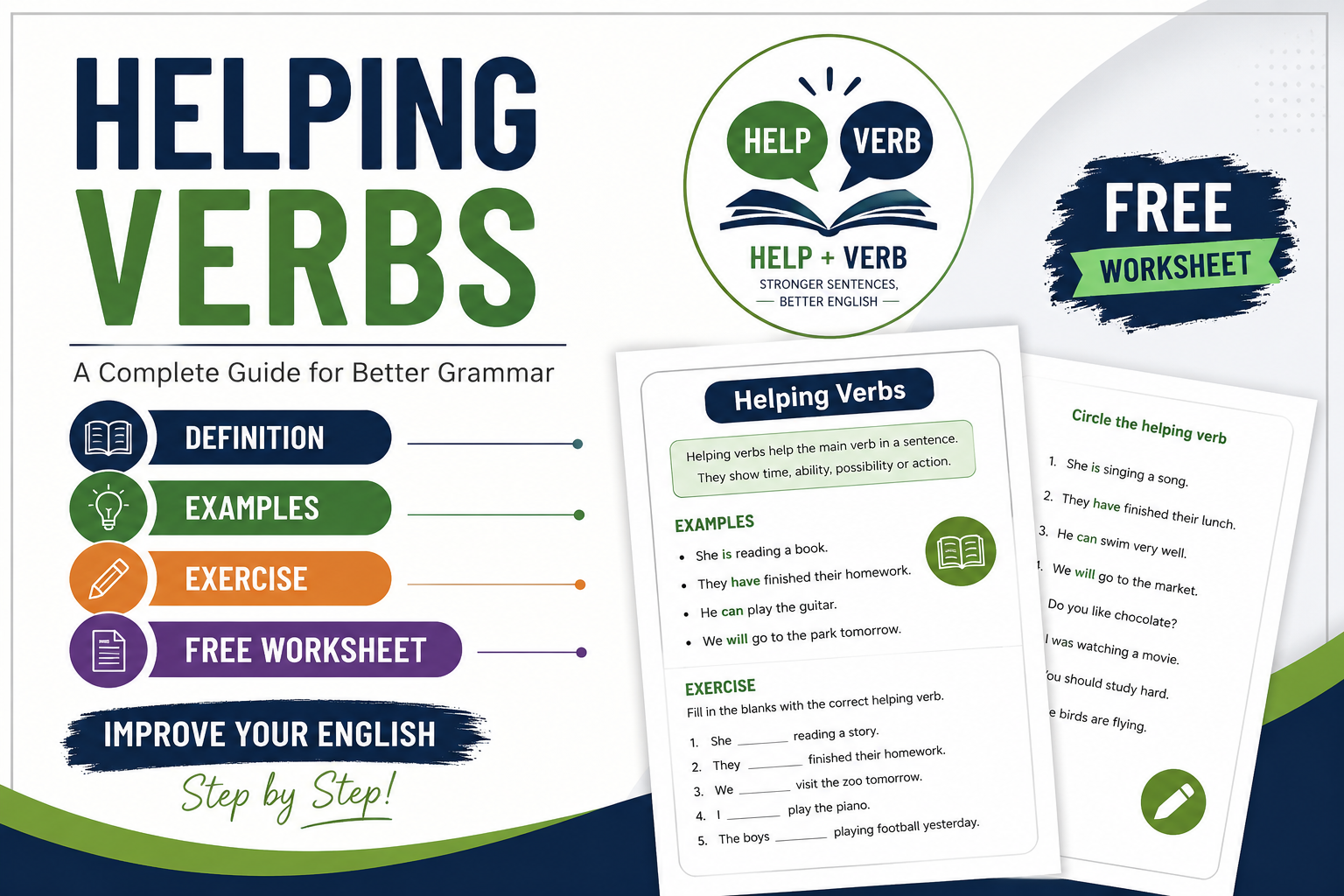
Helping verbs (also called auxiliary verbs) are verbs that help the main verb show time, possibility, ability, or necessity. They do not usually show the main action by themselves.
Common helping verbs
- Be verbs: am, is, are, was, were, be, been, being
- Have verbs: have, has, had
- Do verbs: do, does, did
- Modal helping verbs: can, could, may, might, will, would, shall, should, must
Helping Verbs Examples in sentences
- She is reading a book. (Helping verb: is | Main verb: reading)
- They have finished their homework. (Helping verb: have | Main verb: finished)
- He can swim very well. (Helping verb: can | Main verb: swim)
- We will visit our grandparents tomorrow. (Helping verb: will | Main verb: visit)
- Do you like apples? (Helping verb: do | Main verb: like)
- I was playing football after school. (Helping verb: was | Main verb: playing)
Easy definition for kids:
A helping verb is a verb that helps the main verb tell us more about the action, such as when it happens or whether it can happen.
Helping Verbs Exercise
Circle the helping verb in each sentence.
- She is singing a beautiful song.
- They have finished their homework.
- We will visit the zoo tomorrow.
- Ali can ride a bicycle.
- I am eating my lunch.
- The birds were flying in the sky.
- He has a new backpack.
- Do you like ice cream?
- Sara was reading a story.
- We should help our friends.
Challenge: Write one sentence of your own using the helping verb can.
Fill in the blanks with the correct helping verb.
- She _____ reading a story. (is)
- They _____ finished their homework. (have)
- We _____ visit the park tomorrow. (will)
- I _____ play the piano. (can)
- The boys _____ playing football yesterday. (were)
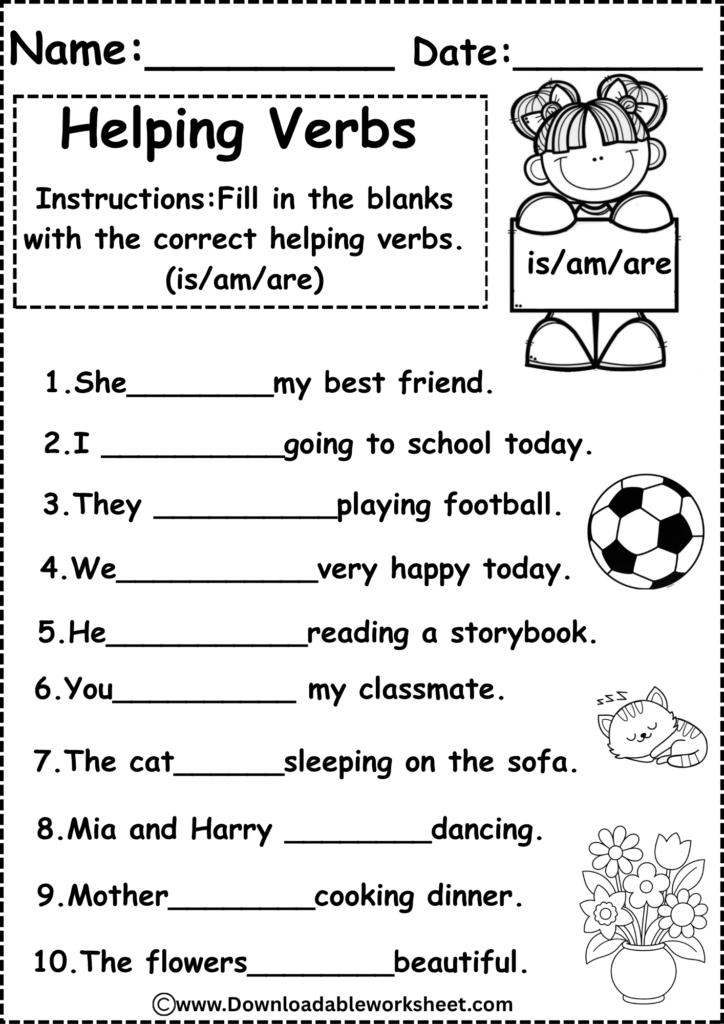
Free Helping Verb Worksheet (Is, Am, Are)
Looking for a fun way to practice helping verbs? Download our FREE Helping Verb Worksheet (Is, Am, Are) and help children build confidence in English grammar. This printable PDF includes simple fill-in-the-blanks, sentence practice, and engaging activities designed for Kindergarten, Grade 1, and Grade 2 students. It’s perfect for teachers, parents, and homeschoolers who want to make learning helping verbs easy and enjoyable.