
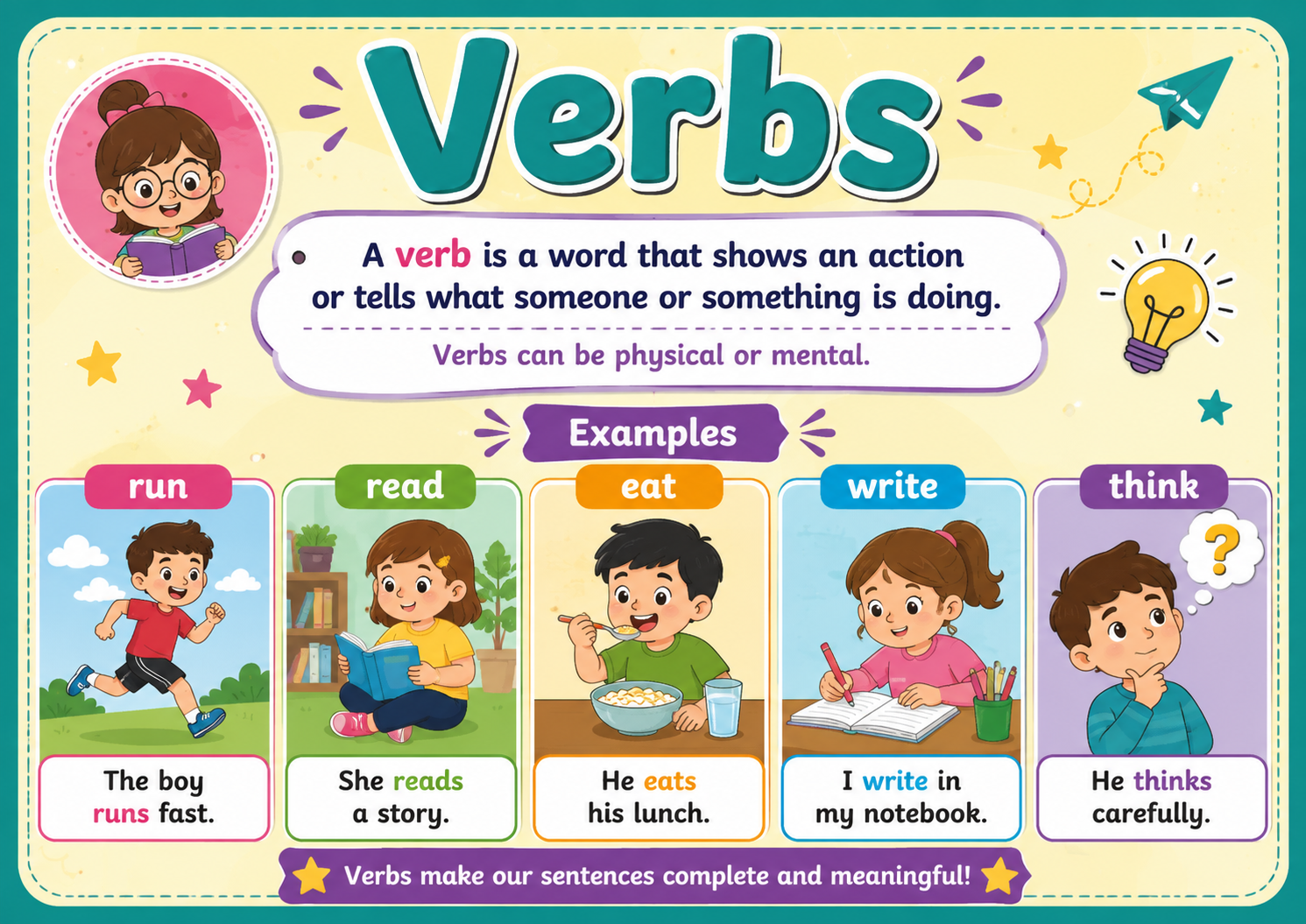
What Is a Verb?
Imagine trying to tell your friend about your day without using words like play, eat, jump, laugh, read, or sleep. It would be almost impossible! These special words tell us what people, animals, or things are doing. They are called verbs. Every sentence needs a verb to make sense. In this fun lesson, you will learn what is a verb, its meaning, different types, easy examples, and simple tips to help you use verbs correctly. By the end of this lesson, you’ll be able to spot verbs everywhere—in books, conversations, and even your own writing!
🎁 Looking for free printable verb worksheets? At the end of this article, you’ll find a collection of FREE printable verbs worksheets that are perfect for Kindergarten, Grade 1, Grade 2, and Grade 3 students. Be sure to download them and make grammar practice fun!
What Is a Verb? (Definition)
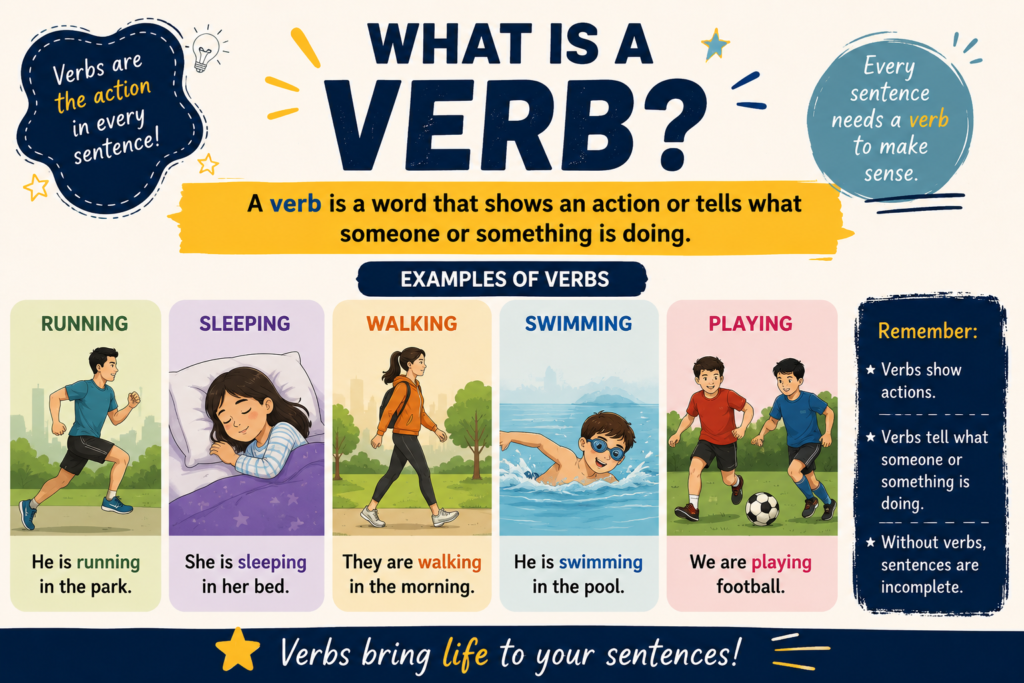
A verb is a word that tells us what someone or something does, what happens, or how someone or something is.
The easiest way to remember it is:
A verb is an action word or a doing word.
Examples of Verbs
- Ahmed runs fast.
- The baby cries.
- Birds fly in the sky.
- We play football.
- My teacher explains the lesson.
The highlighted words are verbs because they tell us what the subject is doing.
Why Are Verbs Important?
When learning what is a verb, it’s important to know why verbs matter.
Without verbs, sentences are incomplete.
Example:
❌ The little girl in the garden.
✅ The little girl is playing in the garden.
Verbs help us:
- Complete sentences.
- Show actions.
- Tell what is happening.
- Describe people, animals, and things.
- Write interesting stories.
- Speak clearly.
- Improve reading and writing skills.
How to Find the Verb in a Sentence
Finding the verb is easy.
Ask yourself:
- What is the person doing?
- What is the animal doing?
- What is happening?
- What is the subject like?
Example
The dog barks loudly.
Ask:
What does the dog do?
Answer:
barks
That is the verb.
Types of Verbs
There are different kinds of verbs. Here are the three main types every Grade 2 student should know.
1. Action Verbs
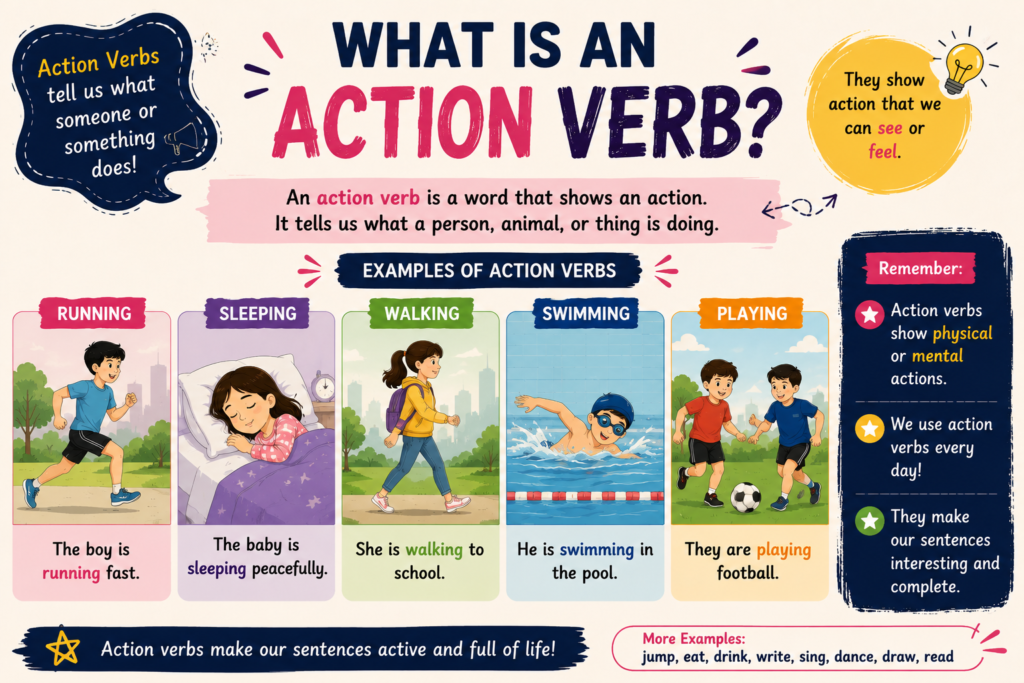
Action verbs show what someone or something does.
Examples:
- jump
- run
- dance
- read
- write
- eat
- swim
- sing
Example sentences:
- Ali runs every morning.
- Sara reads a book.
- The fish swims in the pond.
- We dance at the party.
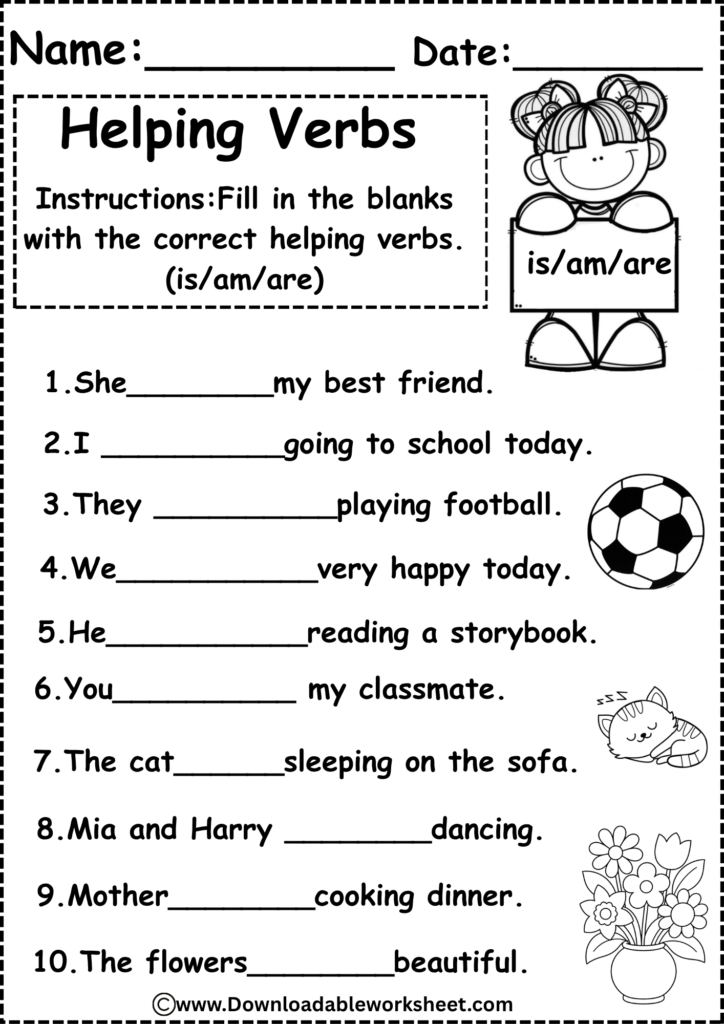
2. Helping Verbs
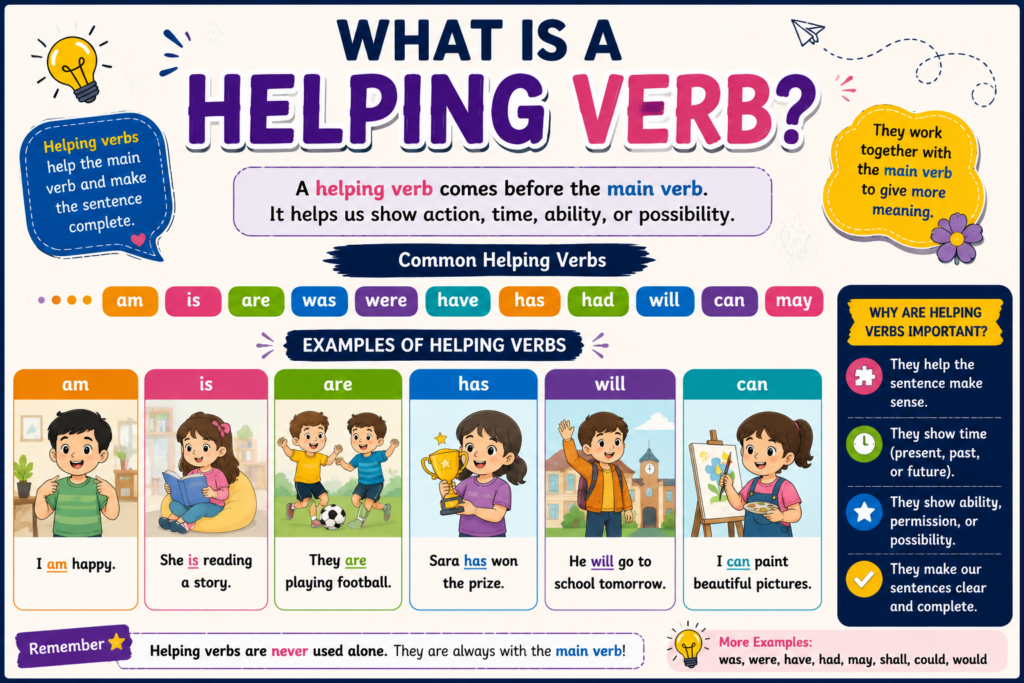
Helping verbs help the main verb.
Common helping verbs include:
- am
- is
- are
- was
- were
- has
- have
- had
- will
- can
Examples:
- She is reading.
- They are playing.
- I am eating.
- We have finished our homework.
Get Free Helping Verb Worksheet Here
3. Linking Verbs
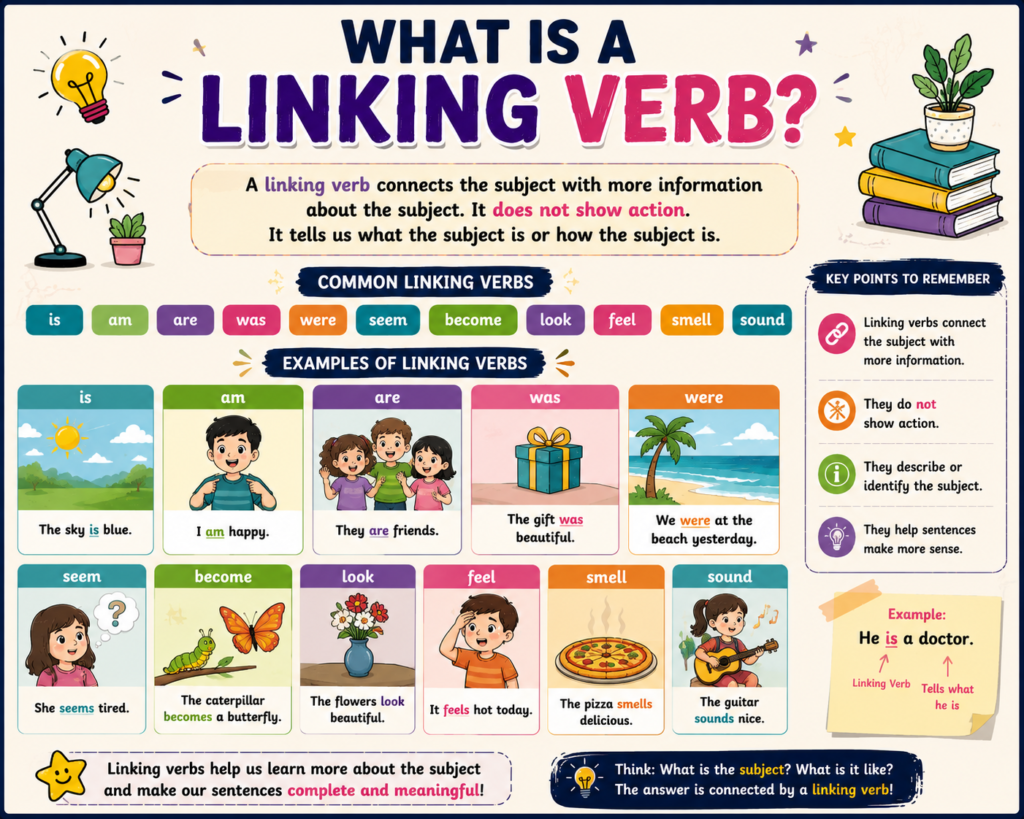
Linking verbs connect the subject with more information instead of showing action.
Examples:
- The sky is blue.
- My brother is happy.
- The flowers look beautiful.
- The soup smells delicious.
Everyday Examples of Verbs
You use verbs every day.
At Home
- eat
- wash
- sleep
- clean
- cook
- drink
At School
- learn
- write
- read
- draw
- answer
- listen
Outside
- play
- walk
- run
- jump
- climb
- ride
Verbs Can Tell Time
Verbs help us know when something happens.
Present Tense
- I play football.
- She reads books.
Past Tense
- I played football yesterday.
- She read a story.
Future Tense
- I will play tomorrow.
- We will visit the zoo.
Singular and Plural Verbs
Sometimes verbs change depending on the subject.
Singular:
- He runs.
- She writes.
- It jumps.
Plural:
- They run.
- We write.
- Birds jump.
Remember:
Most verbs add -s or -es with he, she, and it in the present tense.
More Verb Examples
Here are some easy sentences:
- The monkey climbs the tree.
- My father drives a car.
- The stars shine at night.
- The rabbit hops quickly.
- I love chocolate.
- My sister helps me.
- The wind blows softly.
- The baby laughs happily.
Can a Sentence Have More Than One Verb?
Yes!
Examples:
- I want to play outside.
- She can swim.
- They are singing a song.
- We have completed our homework.
Common Mistakes
Incorrect:
- He run fast.
- They plays football.
- I is happy.
Correct:
- He runs fast.
- They play football.
- I am happy.
Always match the verb with the subject.
Practice Activity
Find the verb in each sentence.
- The bird sings beautifully.
- My mom cooks dinner.
- We play cricket every evening.
- The flowers bloom in spring.
- The baby is sleeping.
Answers:
- sings
- cooks
- play
- bloom
- is sleeping
Benefits of Learning Verbs
Learning verbs helps children:
- Speak English confidently.
- Write better sentences.
- Read stories with understanding.
- Improve grammar skills.
- Get better grades.
- Build confidence in speaking and writing.
- Communicate ideas clearly.
Verbs are one of the most important parts of English grammar.
Tips to Learn Verbs Faster
You can master verbs by:
- Reading books every day.
- Playing action games.
- Writing five verbs daily.
- Making simple sentences.
- Finding verbs in storybooks.
- Practicing with worksheets.
The more you practice, the easier English becomes.
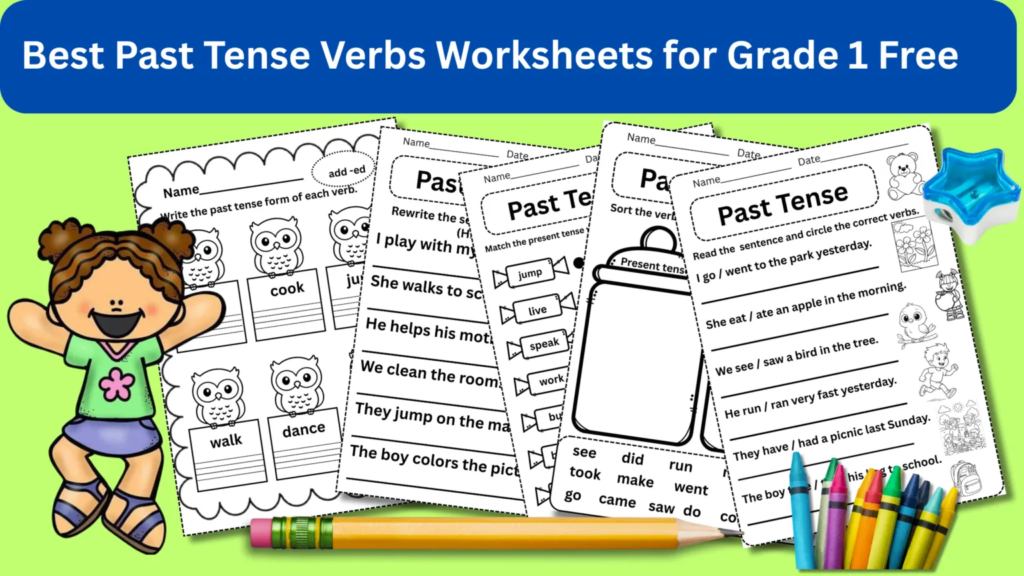
🎁 Free Verbs Worksheets for Kids
Learning about verbs is even more fun when children get to practice! That’s why I’ve created free printable verbs worksheets that are perfect for Kindergarten, Grade 1, Grade 2, and Grade 3 students.
These worksheets include:
- ✅ Circle the verbs activities
- ✅ Identify the action word exercises
- ✅ Fill in the missing verbs
- ✅ Match verbs with pictures
- ✅ Sentence writing practice
- ✅ Cut-and-paste verb activities
- ✅ Fun coloring worksheets with verbs
- ✅ Easy printable PDF worksheets for home and classroom use
Whether you’re a parent, teacher, or homeschooler, these worksheets make learning verbs simple, engaging, and enjoyable.
👉 Download your FREE Verbs Worksheets and give your child plenty of hands-on practice. Regular practice helps children recognize verbs quickly, write better sentences, improve grammar skills, and become more confident readers and writers.
Click the button below to download your free printable verbs worksheets and start learning today!
[Download Free Verbs Worksheets]
Conclusion
Now you know what is a verb and why it is so important. A verb tells us what someone or something does, what happens, or how someone or something is. Every complete sentence needs a verb, and learning verbs helps children become better readers, writers, and speakers.
Keep practicing by finding verbs in books, newspapers, classroom lessons, and conversations at home. The more verbs you learn, the stronger your English skills will become. Remember, every exciting story and every complete sentence begins with a verb!
Frequently Asked Questions (FAQs)
What is a verb?
A verb is a word that tells us what someone or something does, what happens, or how someone or something is.
What are some examples of verbs?
Examples of verbs include run, jump, eat, read, write, play, sing, swim, sleep, and laugh.
What are the three main types of verbs?
The three main types are:
- Action verbs
- Helping verbs
- Linking verbs
Why are verbs important?
Verbs complete sentences, show actions, describe situations, and help us communicate clearly in speaking and writing.
How do I identify a verb in a sentence?
Ask yourself, “What is the person, animal, or thing doing?” The answer is usually the verb.